Minggu, 26 April 2015

THE RELATIONSHIP BETWEEN SCIENCE, TECHNOLOGY, AND SOCIETY


Science and technology is the best thing society could ever ask for. Since the industrial revolution in the 18th century science has been in progress. Some sectors that have been boosted by science and technology are energy, physical sciences, information and communication. The society has greatly gained with the invention of technology.

Infrastructure in the society has grown with the help of science and technology. Modes of transport like electronic railway lines were realized and these actually benefited the society by offering them a better means of transport. In the past, almost everything was analog but thanks to the science and technology we are now being digitalized by the day. The invention of the telephone and radio services has broadened human communication.

Without society then there would be no science and technology and that is why the invention of certain tools and equipment have helped achieve big things. Society can not do without the industries we have today. The society needs science and technology. The creation of computers is work of art by individuals was a milestone that would come a long way in helping the society. A computer helps us to leverage ourselves by gaining valuable information that we can use to enrich our lives. The impact of science and technology can seriously be recognized. Many people around the world take for example scholars in colleges and universities have taken the lead examining the relationship between science and technology.

The evaluation of this relationship has emerged as an important area of research. Public interest groups and academic organizations throughout the world are recognizing the importance of STS. The reason is that people need to recognize that there are people who are affected by the science and technology. Controversies such as modified foods, stem cell research are the issues that have brought policy makers and scientists together to have a way forward on this.

Science and technology has actually largely contributed to the vision of man about himself. Science has been modified the opinion about the origin of man and place of origin too. Through the results of scientific discoveries the perception of man about his behavior and his place of origin has been modified diversely. Experiments in science today are in one way or another affecting the society.Take for example the experiment on cloning a human being. The experiment brought a lot of controversy since the society was skeptical about it.

How is science and technology related to society: The developing world has a long tradition of participatory action research, popular education and community organization joining up to solve some science and technology issues that affect the society. How is science and technology related to the society is something that is calling even for the government intervention. Science and technology related issues are actually been discussed worldwide today. Progress in this has resulted to the ability to produce diverse types of material items. Answering the question how science and technology is related to society.

Science And Technology


 The Mayans developed a variety of technology throughout their history. In fact, they are considered one of the most scientifically advanced societies in Mesoamerica. Amongst other accomplishments, they created a variety of weapons (including spears, clubs and blades) with very little to no metal; instead, they used brittle minerals such as obsidian and chert. Additionally, they successfully made bows and arrows, though these tools were rarely used. 

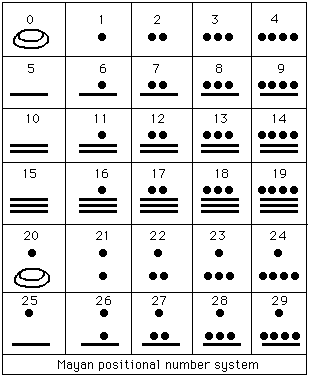
    The Mayans also were skilled at mathematics; they created a numerical system, based upon the numeral 20 (as opposed to our own, which is based on the number 10). Furthermore, they independently developed the concept of zero and positional value, even before the Romans did. This especially sets them apart as capable mathematicians, as few ancient societies mastered this abstract notion before them. 


    Their ability to do complicated math and understand abstract ideas also allowed them to develop complex, highly accurate calendars, even predicting solar and lunar eclipses (amongst other celestial happenings). These were a major part of their culture and were used for many purposes in everyday Mayan life. 

    The Mayans also had a writing system, known as Mayan hieroglyphics (not for any true relation to the Egyptian hieroglyphics, but rather because they were thought similar in appearance). This script had over 1000 characters. The Mayans also had writing tools, usually crafted from animal hair and feathers.


    Finally, and most surprisingly, the hydraulics system of the Mayans was very impressive. Many cities, including Kaminaljuyu, had sophisticated waterways, making use of hydraulic technology to successfully supply water throughout the sprawling communities. This allowed the Mayans to farm with more ease, and was a true innovation within Mesoamerica as a whole.

Full IPhone Utilization

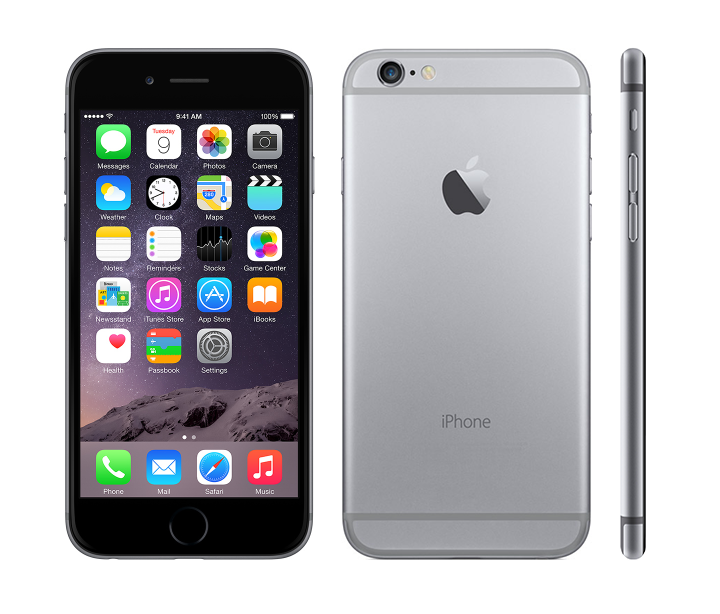
The iPhone is an incredibly popular due to a number of factors. The feature of the iPhone and applications allow anyone who multi-tasks to customize it make it a perfect choice for them. The following tips will help you to learn how to become the master of your iPhone and put its power to use for you.
Get a larger keyboard to make the most of your iPhone. The iPhone has a larger keyboard. Simply turn your iPhone horizontal and touch the Safari address bar.
Save your battery by lowering the brightness on your screen. Go to the settings area on your iPhone to alter the illumination level.
Make sure your phone when ever updates become available. This means that you get the latest software and updates available for your phone will always have what it needs to function properly.
Are you fed up by all the constant notifications you receive on your iPhone? You may turn them off. Go to your apps and remove any that you don't want there. This will also help your battery.
Your iPhone can help you from one location to a new one. The map tab so you can access at any time.
Use your iPhone to help you navigate the neighborhood.The iPhone allows you to bookmark the map function can access it quickly and easily.
Have you ever missed out on a great picture because your couldn't access your iPhone's camera app takes too much time to pop up? Try this easy shortcut. Tap on the Home button when your screen is locked.A camera will pop up somewhere right near the screen's bottom. Tapping this button will enable the iPhone's camera.
You can take screenshots of websites and other screens with your phone. Simply hold the "sleep" button while holding in the "home" button. Your screenshot is captured when the screen turns white momentarily.
If you ever drop your iPhone in water, you should not try turning it on right away. Dry off the outside well and let the internal moisture evaporate. You can permanently short circuit your phone by activating it when wet.
What is a spy camera?
A spy camera is video surveillance device. Spy Cam is a type of micro DVR which is built into a deceptive package of ordinary household objects such pen, keychain, soft toys, wall clock, photo frames, bag, wrist watch, calculator, glasses switch and other device which are generally used in the household.
The camera is disguised in the ordinary things so that while recording the target person does not get alert. Moreover these gadgets are light weight so you can carry it along with you anywhere. The device is popular with numerous names such as hidden camera as it can be concealed anywhereFind Article, spy cam is abbreviated term for spy camera. It is also called nanny camera since it is primarily used for monitoring the kids and their nannies. A wide range of Spy Camera in India is available online and at offline spy shops/stores.
Features of Hidden camera
  • The spy camera captures quality video. The pictures clicked are sharper and clear.
  • Spy cam is very flexible in use. With the wireless option you can place it anywhere.
  • Hidden camera records in AVI format. The format is compatible with almost every computer so the person can see recorded videos at wide screen of the computer later.
  • The spy camera is easy to install. You can conveniently use it for your personal and professional use.
  • The latest models have infrared lenses. The lenses record clear videos in night or dim light also.
  • The device has inbuilt motion detector sensor. The sensors add ease in using the device. Like old models the person does not need to “turn on” the device for recording and “turn off” when the recording is completed. The motion detection sensor detects the movement in the vicinity where it is implanted and automatically start recording. The device stops recording when there is no movement. This feature makes the device free from all hassles of setting the camera and recording. In addition the sensors increase battery life of the camera.
  • The camera enables the user to schedule the time of recording so that he does not have to handle the spy cam manually.

Redefining Modern Art

Add caption
We've discussed on multiple occasions of the powerful and growing influence technology has on fashion. From virtual fitting rooms, live-streamed runways, to new digital marketing platforms, technology, alongside the Internet, continues to be today's strongest driving force in reshaping many of our biggest industries.

So it is no surprise then to find that the art world has also tapped into the limitless capabilities of technology. Today, we highlight a few innovations of what is the latest in the digital art scene.

1. Art in Technological Times, San Francisco's MOMA
San Francisco's MOMA acknowledged this drastic shift in the contemporary art world as technology is recognized as a large component of every day life. In the last decade, artists have adopted to new technologies to make their work more relevant and reflective of today's technology-saturated society. As many museums still struggle to meet the demands of today's audiences, SFMOMA and Intel Corporation present Art in Technological Times. The exhibition is presented both on the Internet and at the SFMOMA itself, making use of both virtual and concrete spaces. The Internet ingeniously functions both as a virtual space to present the work, as well as a platform for discussion. Surveying a range of video practices, sculpture, design projects, computer-driven installations, drawings and paintings, this is one of the first exhibitions that carefully looks at the latest in contemporary art today.

2. Kunstmatrix
With Kunstmatrix, you don't need to live in a major city to see the latest art shows. As nearly everything is moving online, you can now also take a virtual "walk" and view dozens of galleries all in the convenience of your own home.

Kunstmatrix birthed from two architecture students at the TU Berlinwho both recognized the potential of "virtual architecture." While virtual architecture has been around for some time, it is mainly applied to military applications, university research, or video games.

We all know from our own experiences that viewing art online is entirely different, and incomparable, from viewing art in real life. Whether it's a painting or a sculpture, all online art is typically compressed into a flat 2-dimensional photo. And if one is viewing multiple artworks, one must click through a series of thumbnails to view each picture one at a time. There is no unique experience of viewing online art.

However, the designers behind Kunstmatrix recognized this issue and created a fresh, new way of looking at art through the concept of virtual architecture.

photo via: Kunstmatrix

In essence, Kunstmatrix is a site of virtual exhibition rooms. Whether it's paintings, photos, videos, sculptures, or installations, the site can display original artwork in a full-scale and intuitive environment. The work is displayed in gallery-like setting, allowing the visitor to "walk" through the rooms as if one is really inside a gallery.

This new platform offers an innovative way for artists, gallery owners, and collectors to come together to present and sell art. Because it is presented through the web, artists have a wider audience and greater amount of publicity in comparison to a traditional gallery setting. Click here to check out the latest exhibitions.
(source: Kunstmatrix)

3. Trust Art
Social platforms are now also being applied to the art world as Trust Art aims to commission 10 public works of art over the next year with the help of crowd-funding. The site includes descriptions of each project and it's total cost, including material costs, travel, and logistical expenses. Consumers are then invited to become shareholders in any project, giving them access to the artist and network of shareholders as well as special events.

photo via: Trust Art

You are given one share for every dollar you give to a project. Shares may be given away as a gift to a larger community. Every three years, an artwork from a completed project is auctioned and profits are shared between the artists and the shareholders. 

Through this site, people are encouraged to build communities that are united through art. Based on the principles of transparency, community, and collaboration, Trust Art is "a philanthropic initiative to create a self-sustaining community for the production of public art." The concept was originally presented at a TED conference last year. Click here to watch their presentation.
(source: Trust Art)


photo via: Guardian

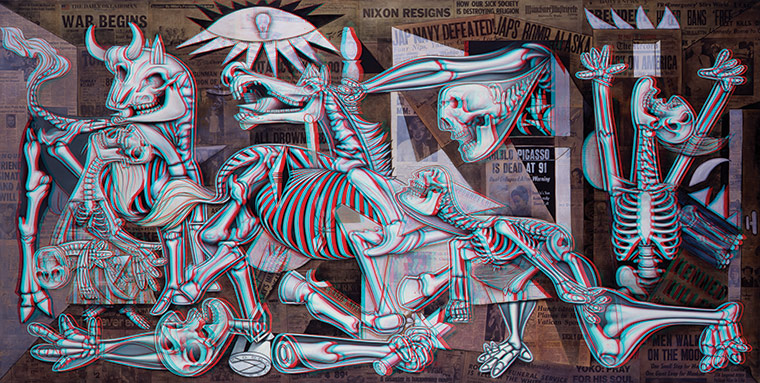
4. Tristan Eaton's 3D Art Book
Art books today just aren't like how it used to be in the good old days. It's better! A new book compiled by designer Tristan Eaton features over 100 works by up-and-coming artists, all in a 3D effect. Each page requires you to wear lo-fi red and blue 3D specs to bring you a completely new way of viewing art.

Abstract Art Is A Technology.


As a participant in an exhibition of abstract 'generative' art called abstrakt - Abstrakt, I spent nine days installing, and had a lot of time to think about the work of the other artists in the show, most of whom used or addressed the crumbling edge of digital technology, and almost all of whom evoked for me the flatfooted logic of the last great wave of abstract art, 1960s era minimalism. My work is sometimes describes as post-minimalist. I like to describe it as post-Star Wars-minimalism, but not because it's high-tech. My art is not-at-all-crumbling edge; I use no advanced technology, my design and fabrication is entirely analog, but by the time I became aware of abstraction, Modernism had been recast as the Deathstar and destroyed. Abstract artist of my generation are "late-adopters." Late adopter is a term usually reserved for technologies. My decision to take up abstraction in the mid-1990s was because abstraction is not astyle, that the difference between abstract art and earlier art is not a difference in quality, it is a difference in kind. But it has only been as I've been thinking about exactly what technology is that it occurred to me that the difference is the difference between a very old technology and a relatively new one.
My relationship with technologies, both cultural and otherwise, are in no way straight forward. I had started my adult art making life by apprenticing to a Luddite and casting figurative bronze sculpture. At first I emulated the coarse peasant style of my master, Tom Jay. Eventually I developed my own "style" and began to think more clearly for myself about my work. To this day Tom's ideas about art formed a foundation of my ideas about art. I learned to think about sculpture thinking about Tom's sculpture. It was with Tom that I worked out my earliest ideas about the kinds of things I wanted my art to be. Eventually I became disillusioned with bronze and the technology of statuary, but never Tom. My attraction to the cool logic of minimalism was counter intuitive - I have never been cool or minimalist in anything I do or make, but in the "demonstrably contingent" objecthood of minimalism I recognized something familiar: a coarse peasant technology. 
Zimoun, untitled prepared DC motors (2010); Robert Irwin, untitled (1971)
"I am not interested in idealizing technology." Sol Lewitt

In his book, What Technology Wants, Kevin Kelly writes that, "The significant threshold of technological development lies at the boundary between commonplace and ubiquity, between have-laters and the 'all have.'" Kelly stretches the term "technology" to encompass the full spectrum of human invention, including “the calendar, the alphabet, the compass, penicillin, double-entry accounting, the US constitution, the contraceptive pill, domestication of animals, zero, germ theory, lasers.” And although he also lists "paintings, literature, music, dance, and the arts in general," he does not discusses abstract art. It is an important cultural innovation that I have never once thought of as a technology. I wish I had thought of it years ago, because thinking of it this way clearifies a convoluted and contradictoy history. 

The story I was told as an art student about abstract art was that the earliest inventors like Kandinsky and Mondrian, believed they were laying down the foundation for universal visual communication; that they were in contact with pure forms and transcendent truths. Their para-scientific theosophy and the fist-waving manifestos produced by their contemporaries in Italy and Russia were all introduced to me and my peers as over ambitious and wildly naive. The machine aesthetics of these early "Utopians," I  was told (in art school), was rejected and over-written by the more grounded rhetoric and gestural flex of the post-war Americans. I was informed that these self-proclaimed Modernists believed that their art was "autonomous," "essential" and "universal' - but were able to avoid Utopian hyperbole by making their claims with cooler rhetoric akin to the era's preferred black box theories. Still the American Modernists were rejected in turn. Their ideas were dismissed and discredited as entirely by their successors, the Postmodernists. What comes around and all that.
Looked at as a progression of styles this is nothing more than a history of arbitrary swings of self-delusion, ideological projection and reactionary slash and burn academentia; viewed at as technology, its a pretty ordinary story of what happens with new inventions. Kelly explains that the inventors of technologies are not always the best judges of a technology's revolutionary potential, or even its most likely uses:
No matter how sure the originator is that his or her new idea will transform the world or end war or remove poverty or delight the masses, the truth is that no one knows what it will do. Even the short-term role of an idea is unclear. Thomas Edison believed his phonograph would be used primarily to record the last-minute bequests of the dying... We make predictions more difficult because our immediate tendency is to imagine the new thing doing an old job better. 
Ralph Baecker, The Conversation (2006); Richard Serra, One Ton Prop (1969)
“...their seeming counterparts in minimalism were demonstrably contingent - denoting a universe held together not by Mind but by guy wires, or glue, or the accidents of gravity.” Rosalind Krauss 

Art is as much part of human history as religion or war. But few if any premodern societies make the modern distinction between Art and life. Here I mean Art with a capital 'A' - Fine Art - High Art - the stuff we go to museums and galleries to see. The split is a relatively recent phenomenon. Before Tom pointed out that native cultures have no word for art I had never thought to wonder about art as an category with a particular and peculiar history. Although Kelly doesn't list it, Art is itself a modern technology. Art as we think of it - largely unattached from direct political or religious objectives - emerges in embryonic form during the renaissance. The first art museums don't appear until the end of 18th century.

Art is all but invisible as an innovation because it simultaneously recalls oil paintings and Paul McCarthy loading his shorts with ketchup, as well as cave paintings and Egyptian statuary. Art evokes deep time in a way that feels timeless and ancient, but also separate; as an autonomous sphere that runs parallel to the rest of history. That separation is the subject of a great deal of hand wringing (art school again), the conceptual isolation of Art is pointed to as yet another symptom of modern decline, an artificial and destructive autonomy. The presumption is that the division represents a loss of contact with a more authentic traditional way of moving through the world. Paradoxically, Art is the precondition of the very modern anti-art impulses of artists like Marcel Duchamp, and the non-art of the minimalists that is the intellectual jet fuel of contemporary Art (the circle remains unbroken). Robert Smithson and Allan Kaprow were able to dismiss museums as mausolea and liken looking Art in a museum to "making love in a cemetery" because they were thinking within a machine constructed to make equivalences out of totally unrelated cultural expressions. Art is a machine for thinking about art.

The ambivalent attitudes of Smithson's and Kaprow represented a widely held consensus with the art world I learned about during my studies. I have always thought it was strange pedagogical practice to inform an entire generation of aspiring artists that their chosen path is bounded within a false and deadening category. Joseph Beuys' challenge that "Everyone is an artist" has scriptural authority in the art world, but curiously the challenge is only ever directed at artists, and usually by non-artist professionals. I have never heard an art professor proclaim that 'everyone is an professor!' an art historian declare that 'everyone is an art historian!' much less an curator admit that 'everyone is a curator.' It is only now, as I have been thinking about Art in terms of technology that I have been struck by how hypocritically that challenge is directed.
Eno Henze. Tomorrow will be like today (2010); Robert Morris, Blind Time XIII (1973)
“Thou shalt not make thee any graven images, or likeness of any thing that is in heaven above, or that is in the earth beneath, or that is in the waters beneath the earth” (Deut. 5:8)

Thinking about Art as a modern technology and imaging the infamous "division of art and life" as an innovation makes sense of my own experience in a way other explanations don't (my artistic labor doesn't feel alienated). For one, the division does not have to be imagined as an exclusion. Kelly observes that new technologies are built on top of, and dependent upon older technologies:
Each new invention requires the viability of previous inventions to keep going. There is no communication between machines without copper nerves of electricity. There is no electricity without mining veins of of coal or uranium, or damming rivers... No hammers without saws to cut handles. No handles without hammers to pound new saw blades.
He adds that we don't abandon old technologies: "In my travels around the world I was struck by how resilient ancient technologies are." And writes,  "It seemed to me as if no technologies ever disappeared." Kelly challenged himself to find farm tools from a page of a 1895 catalog that are no longer made, and couldn't find any:
But maybe 1895 isn't old enough. Lets take the oldest technology of all: a flint knife or stone axe. well it turns out you can buy a brand-new flint knife, flaked by hand and carefully attached to an antler horn handle by leather straps... Today in America alone, there are 5000 amateurs who knap fresh arrowhead points by hand... they produce over one million brand new spear and arrow points a year. These new points are indistinguishable, even to experts... from authentic ones.
Art, like all the other technologies Kelly describes and lists, is dependent on thousands of other technologies. "Ideas fly in flocks," writes Kelly. So underpinning Art are all the arts, from the most up to the moment ketchup buggery, all the way back to cave painting. But of all the technologies Kelly describes, science represents the biggest flock, and of all the technologies he describes it is also the technology that most closely resembles the flock of ideas we now use to think about Art.
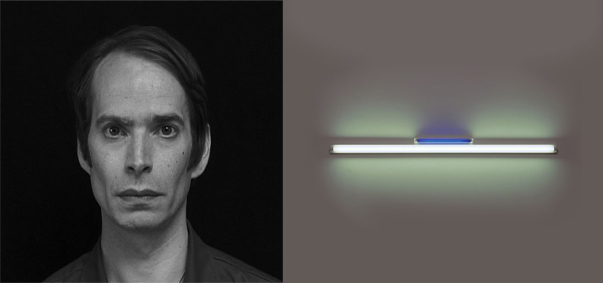
Thilo Kraft, Und (2005); Dan Flavin, untitled (1963)
"A thing is a hole in something it is not." Carl Andre

In his book, The Postmodern Condition, Jean-Francois Lyotard contrasted the local mythopoetics of "narrative knowledge" against the commodified "scientific knowledge." Lyotard comes across as a bit of a chicken little (read the book and decide for yourself if the sky is falling), but there is an interesting detail to his argument - that scientific knowledge is dependent on narrative knowledge. That if you dig deep enough into any scientific idea you find at its foundation, a justification, an origin story of the sort that supports traditional myths. "Progress" is one of these "metanarratives." Kelly's entire book can be read as an answer to Lyotard's Postmodern "incredulity towards metanarratives" of scientific knowledge - Kelly has written a passionate defense of Progress with a capital 'P'. Still, Lyotard's observations and Kelly's are not entirely contradictory. Narrative knowledge framed by Kelly's thought, is merely an old technology (one we love). Scientific knowledge meanwhile is a more recent technology, but Kelly makes the point repeatedly that no new technologies ever totally displace old ones. Nowhere does Kelly denigrate narrative knowledge and he make no special truth claims for science:
Despite its own rhetoric, science is not built to increase either the "truthfulness" or the total volume of information. It is designed to increase the order and organization of knowledge we generate about the world. Science creates "tools" - techniques and methods - that manipulate information such that it can be tested, compared, recorded, recalled in an orderly fashion, and related to other knowledge.
Its worth noting that Lyotard could not think, much less write about the narrative knowledge of the Cashinahua without the connective structuring technology of scientific knowledge. Kelly admits that innovation often brings destructive social confusion. He admits that, "there is nothing as disturbing as the sight of indigenous tribesmen... wielding chainsaws to fell their own forests" but is quick to point out that clear-cutting is unnecessary: "habitat destruction of any type is deplorable, and stupidly low-tech." Likewise Art and art are not necessarily mutually exclusive technologies. Like science, Art can be thought of as a totalitarian metanarrative, one that destroys older traditional art, but can also be looked at as an 'ordering of knowledge' - a structure that connects otherwise irreconcilably different cultural orderings that makes them viable, not only to one another, but to all Art.
Marius Watz, Grid Distortion ALU o27 (2007); Carl Andre, Alcloud (2007)
“Avant-garde research is functionally... or ontologically... located outside the system, and by definition, its function is to deconstruct everything that belongs to order, to show that all this ‘order conceals something else, that it represses.” Jean-Francois Lyotard

Like Kelly's concept of science as technology, thinking of Art as technology spreads "previously locally known knowledge by adding it to the growing pool of structured global knowledge."  I am aware that Lyotard's report on knowledge ruffled a lot of feathers in the scientific community when it was published. But Lyotard's criticisms are are persuasive, even if most of the conclusions he arrives at are not. Kelly's concept of science in no way contradicts Lyotard's criticisms, but the two come to very different conclusions. Kelly's science-as-a-technology upends the French philosopher's judgement of science-as-intellectual-imperialism. One definition of technology that Kelly mentions "is everything that doesn't work yet." He makes it clear that he believes science is a developing technology, an "accumulating structured global knowledge" that is still accumulating new techniques and processes. If indeed scientific knowledge is "set apart from the language games that combine to form the social bond" perhaps that difference is less about control and more a question of, what Lyotard's way more awesome contemporary Michel Foucault might describe as allowing "these games of power to be played with a minimum of domination."  As I imagine Art as a technology, as an accumulating structured global knowledge, that doesn't work yet.  But I find myself in full agreement with Foucault: 
I don’t believe there can be a society without relations of power, if you understand them as means by which individuals try to conduct, to determine the behavior of others. The problem is not of trying to dissolve them in the utopia of a perfectly transparent communication, but to give one’s self the rules of law, the techniques of management, and also the ethics, the ethos, the practice of self, which would allow these games of power to be played with a minimum of domination. 
Brandon Morse, Achilles (2009); Robert Morris, Threadwaste (1968)
"I think highway systems fall down because they are not art." Tony Smith

With Foucault and not Lyotard in mind I am not at all alarmed when Kelly writes, "We say knowledge increases not only when the number of facts increases, but also, and more so, when the number and strength of relationships between facts increases. It is that relatedness that gives knowledge its power" (emphasis added). Not all power is oppressive. Modern structures of authority are characterized by efforts to minimize domination. Kelly's description of science as methods of structuring knowledge that has evolved over time could just as easily be a description echo the ways art history and art conservation have developed over time. Just as science has expanded and strengthened by accumulating new methodologies, like controlled experiments which were used by Francis Bacon in 1590, and more recently the double blind experiment which was introduced in 1952, Art has expanded and strengthened by means of rules of law, the techniques of management, and also the ethics, the ethos, and practices.

Important positive changes in Art practice can be measured by a walk across Central Park; from the Natural History Museum to the Metropolitan Museum of Art. Both museums have collections of African masks, dugout canoes and pre-Colombian carvings, but the Natural History Museum's oldest hall is a relic of the 19th century when those sorts of objects were treated as ethnographic evidence. One hundred years ago the decision was made to chainsaw down their collection of Northwest Coast house posts in order match the height of the posts to the ceiling of the hall where they are installed. Compare that destructive disrespect with the Mat's galleries of Oceanic Art which presents similar material within a more modern curatorial program and conservation ethos (dental tools, cotton swabs and distilled water; no chainsaws). The old ethnographic model was demeaning - stupidly low-tech. Extending the special dignity and care afforded to objects of Art to previously excluded classes of objects is a positive technological development.
Trimmed house posts on display at the Museum of Natural History, Cashinahua men with their chainsaws.
“If the future is 'out of date' and 'old fashioned,' then I have been in the future.” Robert Smithson

The most remarkable aspect of Art as a technology of "accumulating structured global knowledge," that takes its power from "the number and strength of relationships between facts" is how new it is, and how much it has developed in the past half century alone. In the spring of 1979 the art historian Rosalind Krauss complained against strategies that "diminish newness and mitigate difference":
Over the last ten years rather surprising things have come to be called sculpture: narrow corridors with TV monitors at the ends; large photographs documenting country hikes; mirrors placed at strange angles in ordinary rooms; temporary lines cut into the floor of the desert. Nothing, it would seem, could possibly give to such a motley of effort the right to lay claim to whatever one might mean by the category of sculpture. Unless, that is, the category can be made to become almost infinitely malleable.
Krauss was and is a proponent of "newness," even if she was turned off by the means with which it was being achieved: 
Stonehenge, the Nazca lines, the Toltec ballcourts, Indian burial mounds-anything at all could be hauled into court to bear witness to this work's connection to history and thereby to legitimize its status as sculpture. Of course Stonehenge and the Toltec ballcourts were just exactly not sculpture, and so their role as historicist precedent becomes somewhat suspect in this particular demonstration. But never mind. The trick can still be done by calling upon a variety of primitivizing work from the earlier part of the century - Brancusi's Endless Column will do - to mediate between extreme past and present.
As it turns out to "diminish newness and mitigate difference" is to extend dignity. Krauss's concern with mitigating differences overlooked the power and authority afforded by inclusion. Even so, the point is moot. Whatever else Stonehenge and the Toltec ballcourts may have been before earth Art, thanks very much to the twisting and stretching of the artists Krauss admired (especially Robert Smithson), who were building massive earth mound sculptures and drawing connections to contemporary not-sculpture precedents like, highways, abandon airfields, monumental parking lots and other industrial utilities, these "historicist precedents" are now dignified as Art as well. 
Softlab, (n)arcissus (2010); Donald Judd, untitled (1968)
“It is impossible to tell what is hanging from what or what is supporting what. Ups are down and downs are ups. An uncanny materiality inherent in the surface engulfs the basic structure. Both surface and structure exist simultaneously in a suspended condition. What is outside vanishes to meet the inside, while what is inside vanishes to meet the outside.” Robert Smithson

I chose to make abstract art because I found abstraction as a powerful tool to think about Art. The "inventors," "early adopters," and even the American "have-laters" misunderstood the importance of abstraction because they were looking at what Kelly calls "first order" effects. A lot was made of the 'flattening of the picture plane' during the Cold War and abstract art is still discussed seriously as a reaction to the invention of chemical photography. Perhaps because I am a sculptor, I have never found either of these theories convincing. To tag abstraction at the end of an evolution of picture making techniques doesn't fit the evidence. For one thing, abstraction doesn't belong at the end of anything. Despite the absolutist claims made by artists that abstraction represents the end of painting, the end of sculpture or the end of Art, it has proved to be an ongoing enterprise developing along side photography and cinematography. It is part of a developing technology of  openings and beginnings.

Art, as a technology of structured knowledge, is a far more convincing technological precondition for the development of abstract art. Kelly writes that "Technologies shift as they thrive. They are made and remade as they are used. They unleash second- and third-order consequences as they disseminate. And almost always, they bring completely unpredicted effects as they near ubiquity." Abstract art is now "near ubiquity." It is what Kelly calls an "all-have" technology. I have no memory of it as anything else. I can't remember ever being shocked by the presence of abstract art in a museum. Abstract art may not have been popular when I was a boy, but it was already a given. By the late 1970s abstract art had become the status quo that new shocking art played itself out against.
Robert Hodgin, Flocking (2007); Sol Lewitt, Incomplete Open Cubes (1974)
"The uses of the past to illustrate the shape of art's change as a coherent progression informs all recent art theory. Institutionalized memory remains the primary mythical arena, dominated and terrorized by the inadmissible suspicion that time passes the more or less random processes of cultural change rather than receiving the impress of evolving systems." Robert Morris

Whatever reasons artists of the post-Cold War generation might have for making abstract art, it no longer had anything to do with revolutionary change. By the mid-1990s abstraction had been persuasively dismissed by its Postmodernist and anti-modernist critics as art about Art. But the story the Postmodernists were telling about Art made abstraction attractive for new reasons. I am native to an Art in which "anything goes." I am a contrarian and would have never taken up abstract art if I had been told that was the only thing I could do (I repeatably was advised against it). To paraphrase Kelly: Art is a machine we have invented to connect otherwise incompatible cultural practices. Abstraction is the first technology native to that machine.
The Modernists, fairly or not, are personified by the likes of Clement Greenberg, an unabashedly elitist art theorist who beginning in the 1930s imagined abstract art as a bulwark against the tide "ersatz culture" (recorded music, cheap color prints, all other mass-produced what-not, and perhaps most persnickety: tap dancing) that was spilling out over the world; Leo Strauss the University of Chicago based economist who was the intellectual Godfather to the Neocons; and the urban planner Robert Moses who was stopped short before he could completely destroying New York for its own good, but only after he set terms for large scale urban blight all around the world. These Modernists and their peers imagined themselves as a natural aristocracy, one based in merit not birthright. Abstract art, it was imagined, the court style of this meritocracy.
This rouge's gallery ignores the fact while these were some of the dominant voices, they were not the only voices. There were a complex array of oppositional voices during that time, but all the same the overall intellectual tone of that era was paternalistic - Father Know Best meets Gun Smoke. Their natural aristocracy was, in the end, less about merit and lot more about privilege. The Modernists famously believed that "less is more." Under their watch Art was exclusive; less Art, not more, was their answer. They championed Art as a refuge that required gate keepers to protect it from the much more modern ethic of anything goes. Post-Modernism was a much needed break (if awful moniker) with the ideas, aesthetics, and most importantly the paternalism of those Cold-Warriors. By means of the Postmodernist's "incredulity" towards the restrictive metanarratives of Modernism, the expansion of Art that had begun with the early moderns was rebooted, solidified and expanded. 
Jorinde Voigt, Interkontinental / Boeing-Studie (2010); Carl Andre, Am Am Not Am Not Willing (1972)
"We are pressing downward on toward no art – a neutral pleasure of seeing known to everyone.” Dan Flavin 

In the stories told about abstraction it is easy to recognize the tendency Kelly identifies as an aspect of all technological innovation: "to imagine the new thing doing an old job better." The Modernists were blind to the second order effect of abstract art, that it was altering the technology of Art, twisting and stretching it in ways that made it unrecognizable. The Modernists misimagined Art as something immutable, in technological terms, they believed it was a utility, an infrastructure, "something gray, behind a chainlink fence." This is why artists, like Joseph Beuys, Marcel Duchamp and Robert Smithson, who drew our attention to that "gray thing," were met with Modernist prohibition: not-sculpture, not-painting, not Art. Kelly argues that in the long run technological prohibition never works, and that the cure for a bad technology is more technology. That every new technology is a mixed bag of good and bad, but more is always better, that innovation and not prohibition is always the answer. But Art is very much a technology in the sense that it is something that "doesn't work yet." It is a utility that is forever becoming, to borrow from Smithson on the subject of looking at industrial utilities like dams and bulk storage systems aesthetically:
If viewed as a "discrete stage" [dam foundation site] becomes an abstract work of art that vanishes as it develops... Te process behind the making of a storage facility may be viewed in stages, thus constituting a whole "series of works of art from Ground up... when it functions as a dam it will cease being a work of art and become a "utility."
Kelly warns against mistaking "direction with a destination." Just as a Utopian "future as un-soiled technological perfection is unattainable," so too is a universal Art of perfect communication. Kelly believes that "the future as a territory of continuously expanding possibilities is not only attainable but also exactly the road we are on now." A technology that conflates thruways with burial mounds and shaman with a man rubbing himself with tomato paste confounds all progressivism, but Art can continue to "be made to become almost infinitely malleable," because that is exactly the road we are on now.